The
Escuminac
Lighthouse
THE FIRST LIGHTHOUSE
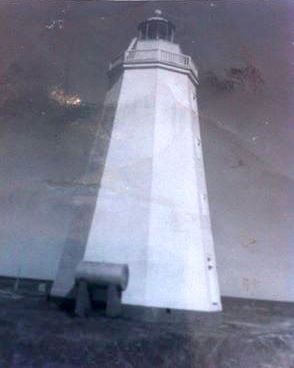
The first lighthouse was built in 1841 after several requests from fishermen and ships traveling through the Northumberland Strait.
The first lighthouse was octagonal in shape and made of wood. It was white and red.
Since there was no electricity, the lighthouse ran on batteries and oil. So someone always had to be on site to make sure it was working properly.
A foghorn was installed in 1876 to help fishermen in foggy conditions. Someone had to operate it. Several people had to settle at the Point Escuminac to ensure its operation. They were known as the lighthouse keepers. We find the names of John McEwan, William Hay, Thomas Phillips, James Carter, Kenneth McLennen, Merrill Tredholm, Bliss McLennen, Evé LeBlanc and his family, as well as his brother Albin LeBlanc and, lastly, Paul Durelle. The lighthouse keeper had to remain at the Point Escuminac at all times. The lighthouse operated 24 hours a day, 7 days a week. Only the last keeper, Paul Durelle, worked there during the day. People remember Evé LeBlanc and his family in particular.
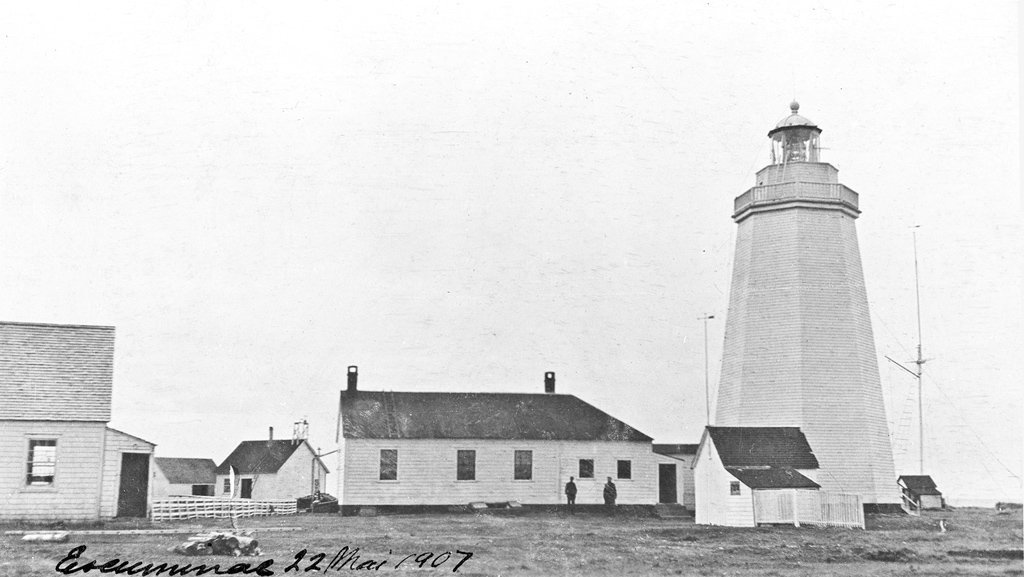
(1907)
The caretakers lived in houses that had been built especially for them. The children attended the parish school. In winter, they had to travel part of the way by snowmobile. Eve, a third-grade student, tells us that her grandfather, Adé Savoie, worked on the construction of these houses.
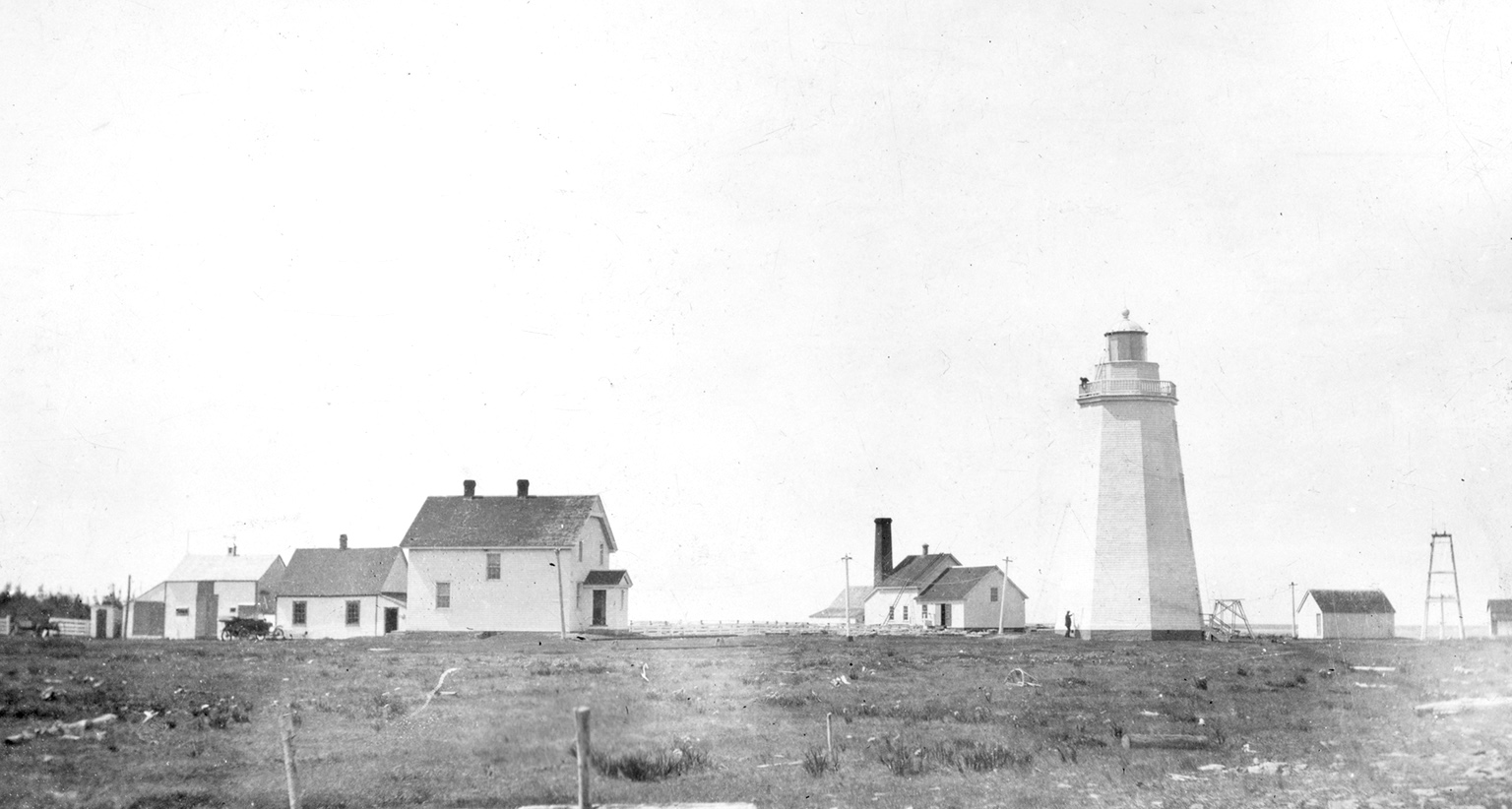
(1933)
These four houses were sold and moved in 1987 after the lighthouse's operations were computerized. One house was purchased by Sandy and Donna Hitchman, another by Cindy Hitchman, Bliss Guimond, and Tim Durelle. Three were installed in Escuminac, while the other was moved to Bay du Vin.
LIFE AT POINT ESCUMINAC
In addition to the lighthouse, there were also lobster factories near the lighthouse. Companies such as W.S. Loggie, Harrisson, and W.R. Loggie owned these factories. They had boats that they kept there and hired men to fish these boats. Men and women were hired to work at the lobster shop. These people were taken there on horseback at the beginning of the season. They were provided with room and board. The women stayed together and the men stayed together. For meals, they went to the cookhouse, where they were fed. One of the factories was bought by Adé Thériault a little later. There was also a barn for the animals and gardens.
Why did we settle in Point Escuminac?
There was no dock at Escuminac, and the point was rocky. On the south side, boats could almost be pulled up to the shore. They were sheltered from the wind.
Why don't factories exist anymore?
The fishermen started cooperatives and bought their own boats. After that, construction began on the docks.
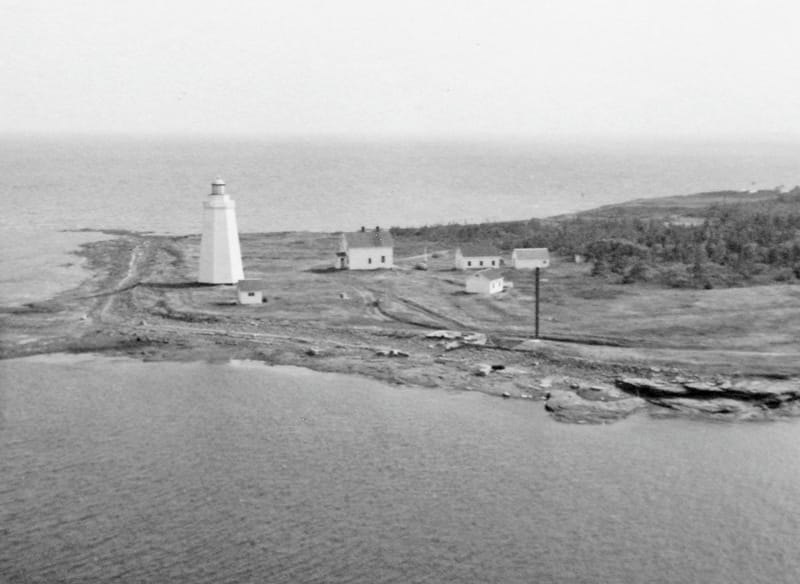
After a hundred years, the lighthouse was no longer safe, so plans were made to build a new one. It had to be moved 400 feet inland due to erosion. It was built in 1966. It is hexagonal in shape and made of concrete.
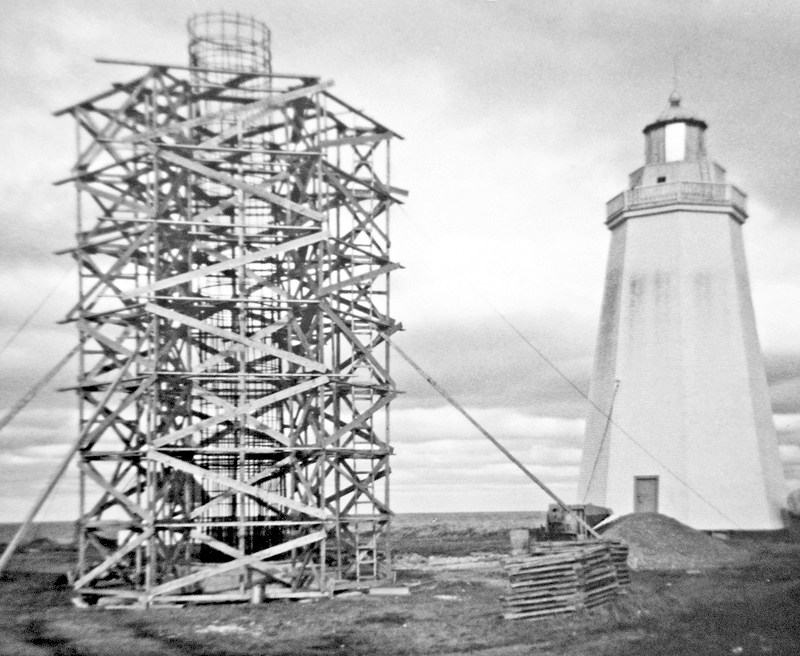
(1966)
Ève Savoie's grandfather, Adé, and Angèle, Céleste, and Calixte's grandfather, Adé Jr. Thériault, worked on this lighthouse. It is also white and red.
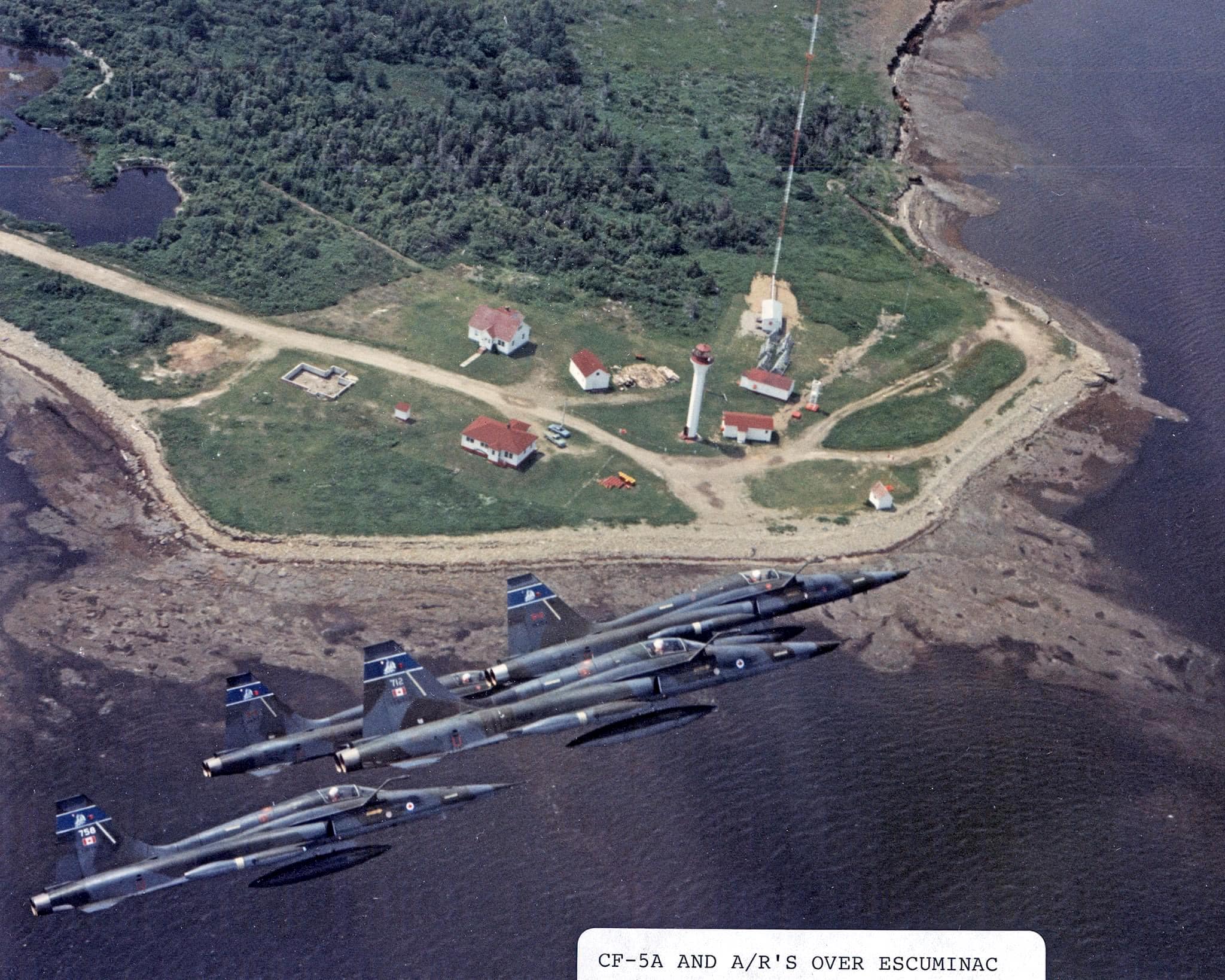
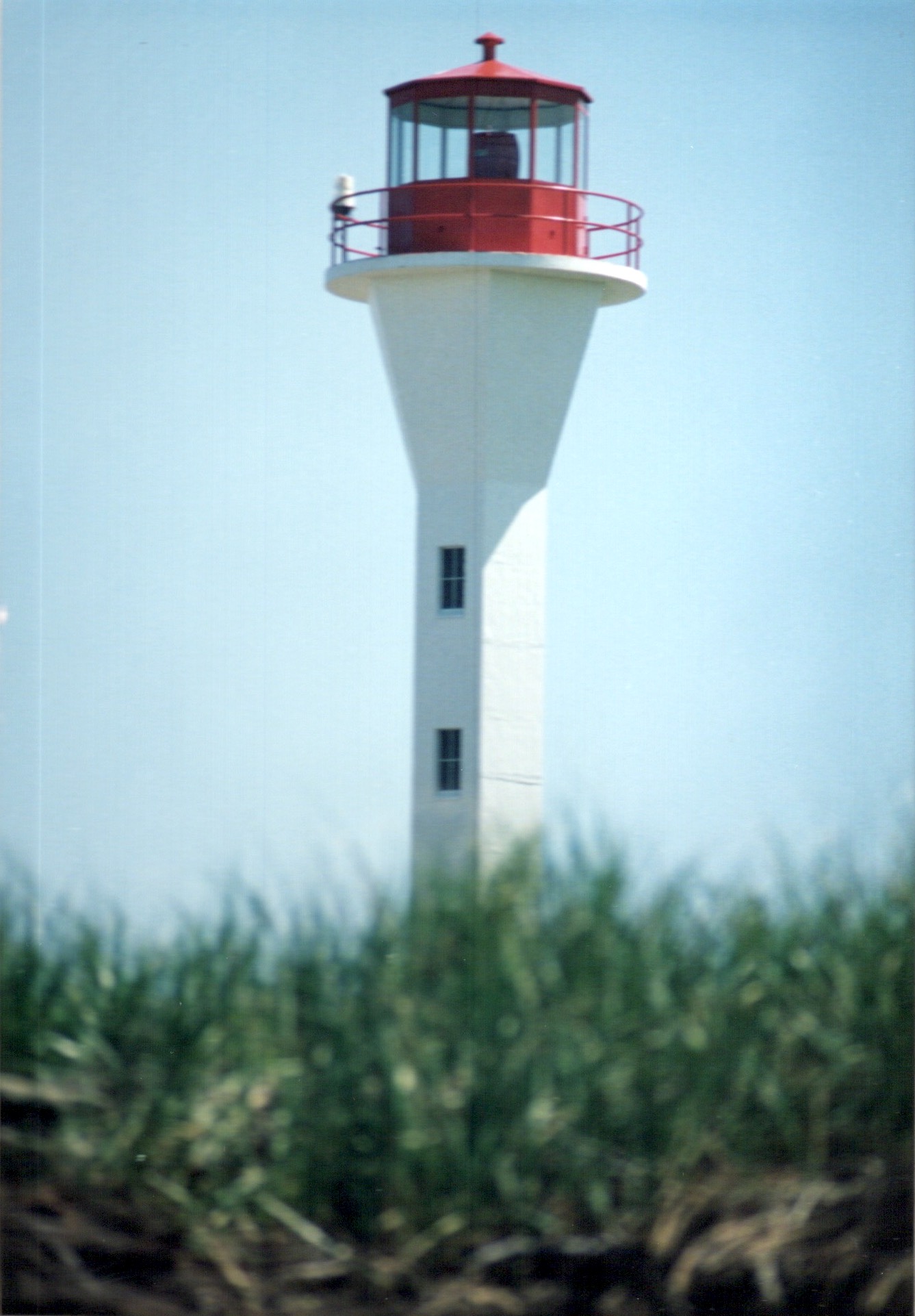
When it came time to paint the lighthouse, Médard Mazerolle, Marie-Josée Leblanc's great-uncle, painted it. He painted the first section white, the second red, then white again, then red again. When the inspectors arrived, they insisted that the tower be painted white and red. So he had to start over. He remembers painting the lighthouse three times.
How did people get to the Point Escuminac in the past?
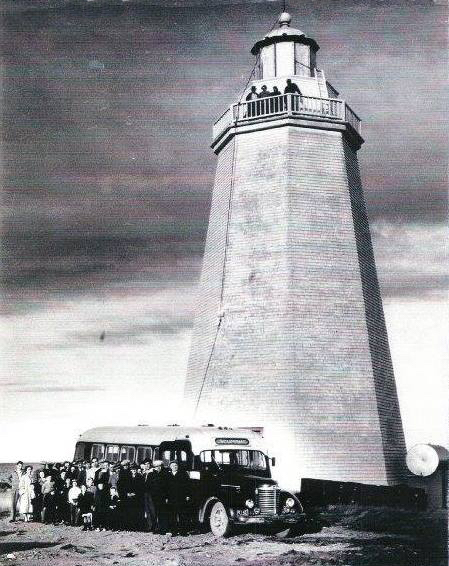
In summer, people traveled by horse until trucks and cars arrived. The government was also responsible for maintaining the road. Adé Thériault often transported people in his truck or tractor. In winter, snowmobiles were used. Before that, there was what was called the bomberdier, which was mainly used by lighthouse keepers.
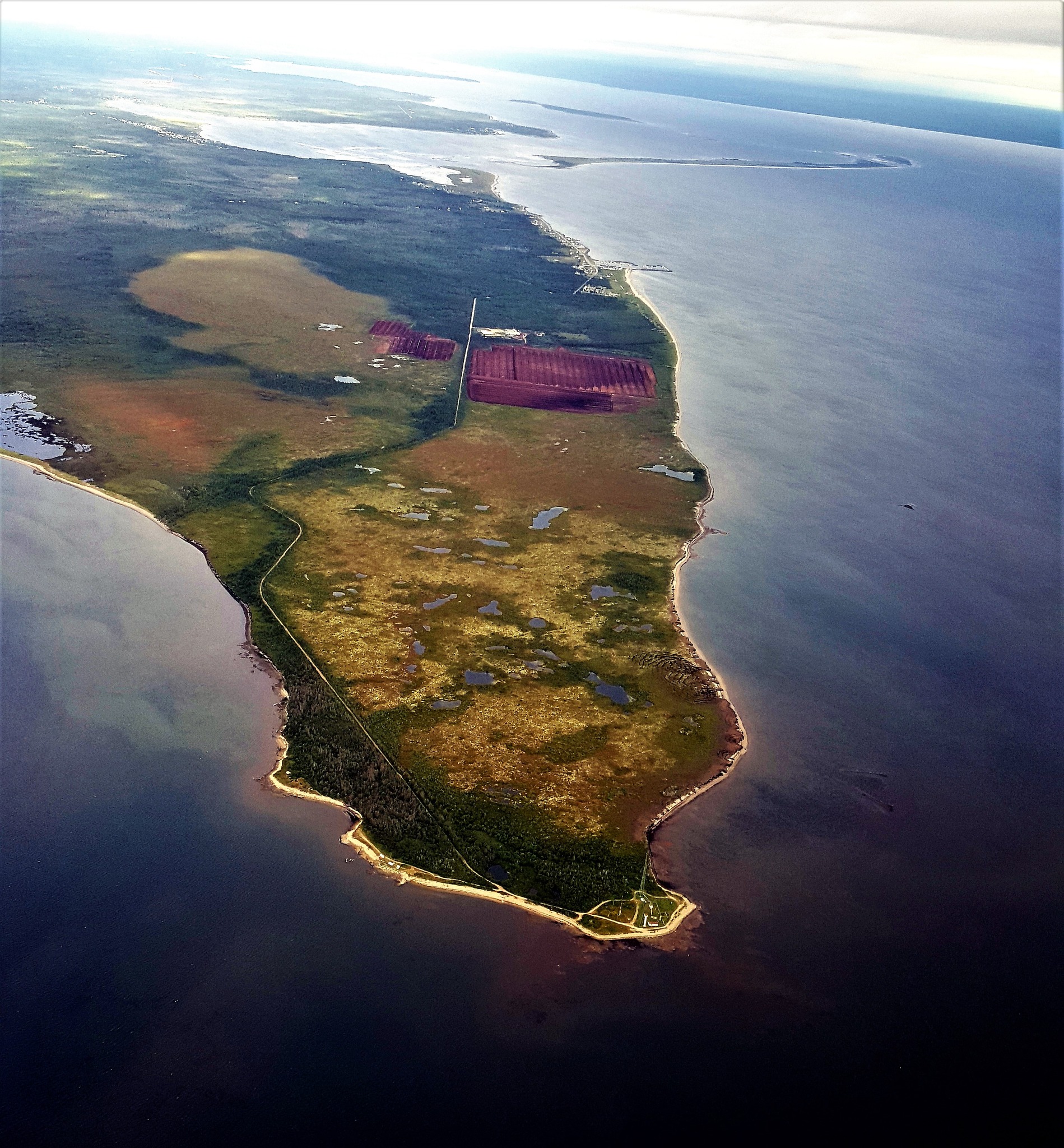
How to get there?
To get to Point Escuminac, you have to take a dirt road or you can walk there along the coast. The dirt road is about 5 km long. It's a rough road, so watch out for potholes. Along the way, you can admire the natural surroundings, and halfway there, you'll see an eagle's nest.
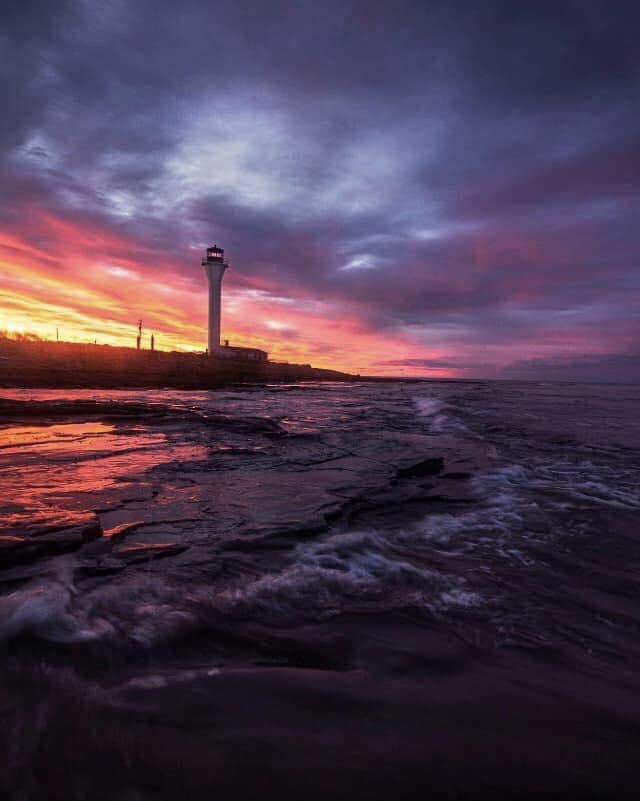
It is also a mossy terrain. A peat company called Goodearth develops this natural resource and employs a few people.
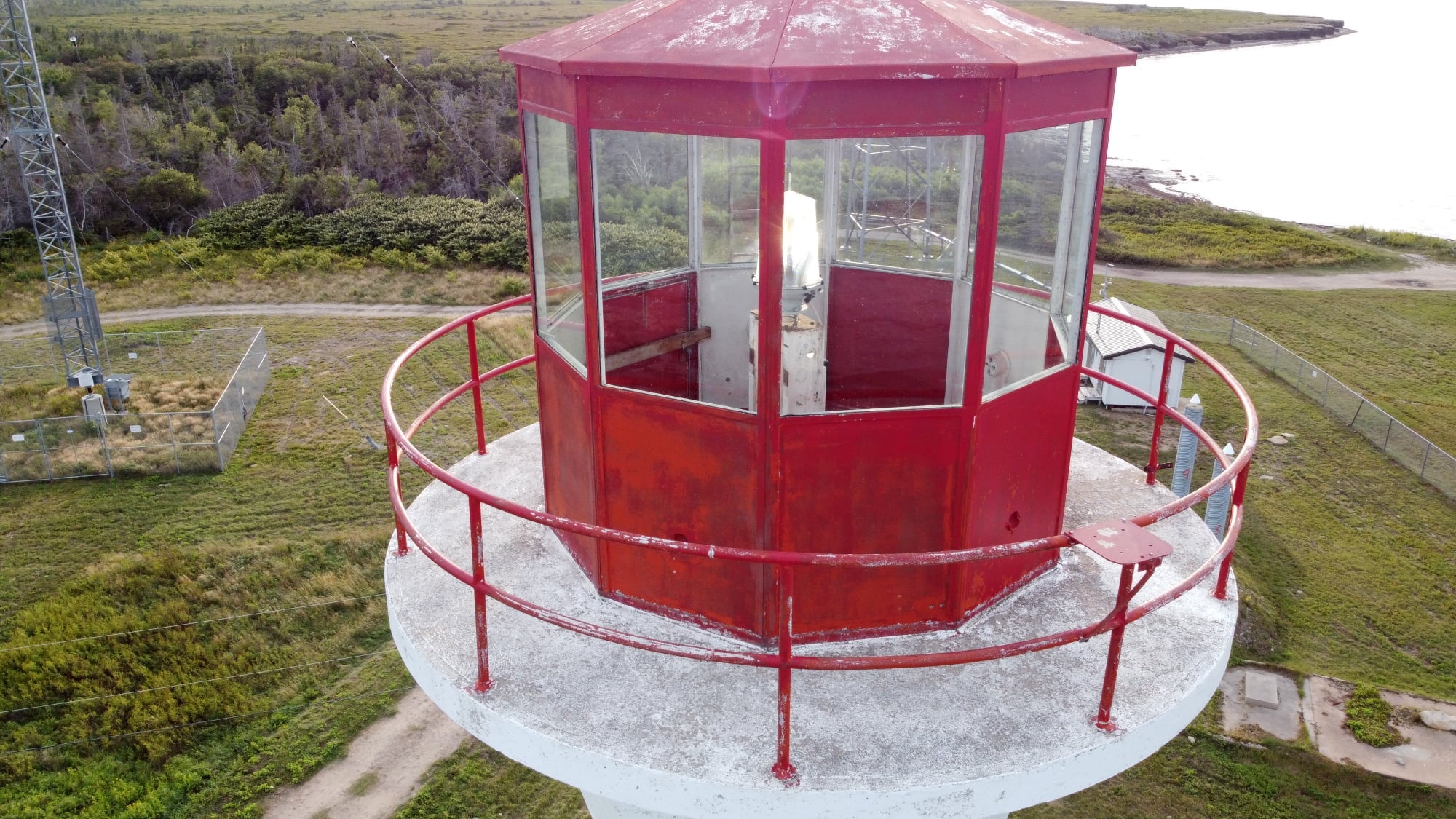
Walking along the coast from the Escuminac Beach and Campground, you can also reach the tip. At a distance of about 14 km, it's a fairly peaceful walk. You can explore the peat cliffs and the various birds that nest there, collect shells, examine the different rocks, see the erosion caused by the sea up close, and see tree trunks that are thousands of years old. It's an excellent excursion.
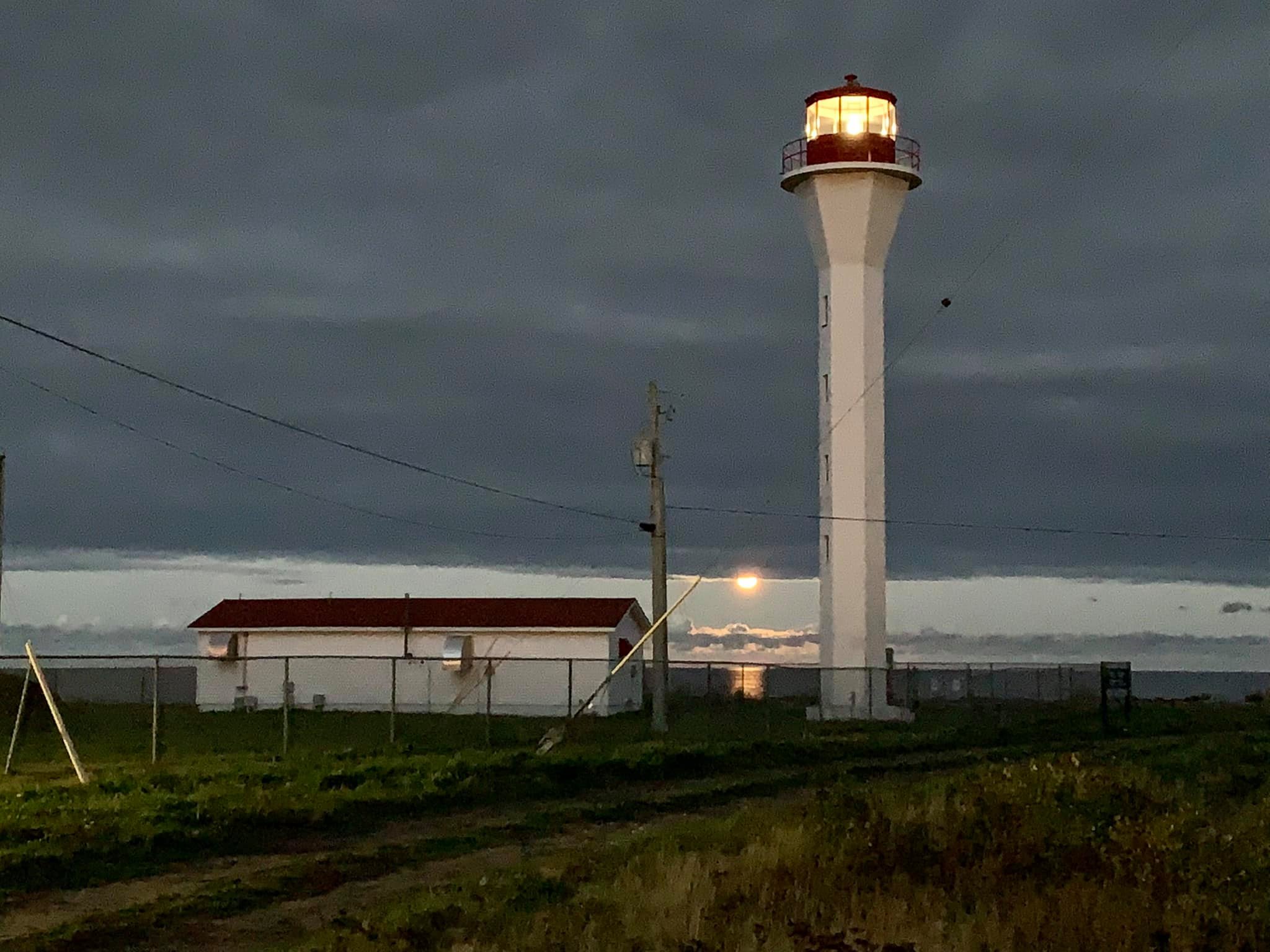
Today, if we need to check the lighthouse or the weather station, we use a helicopter. In 2008, another tower had to be added to the station, so we repaired the road to get there.
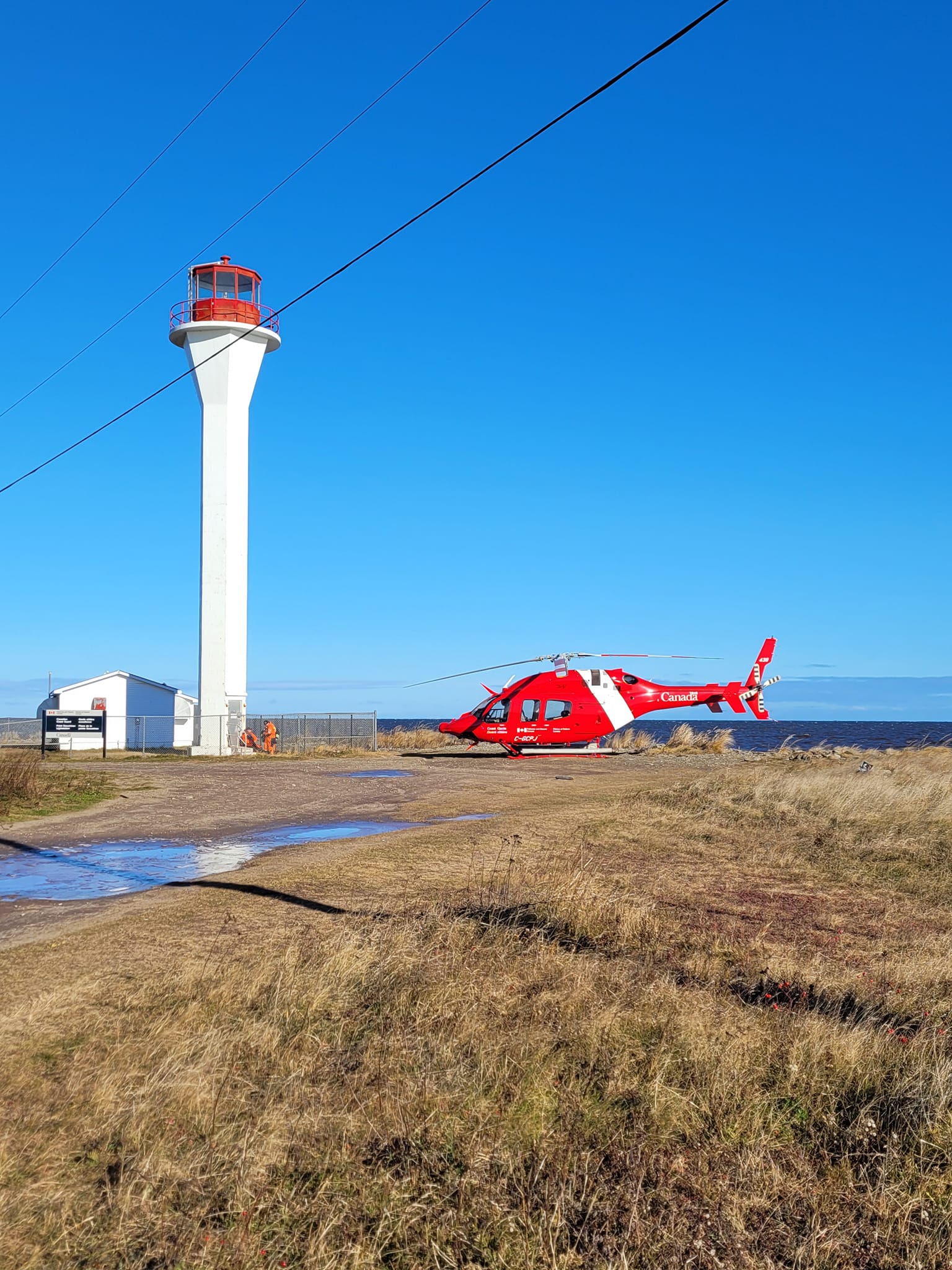
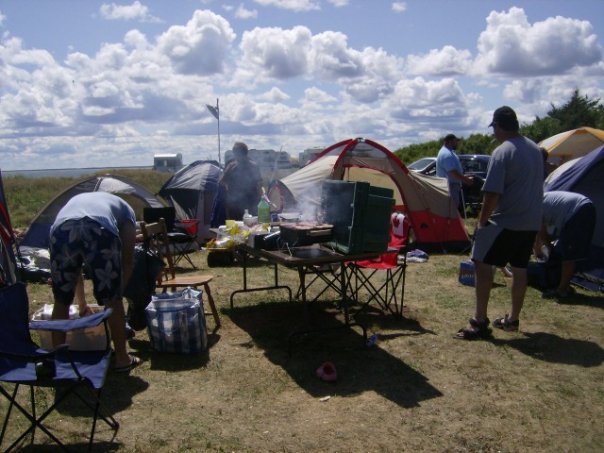
The lighthouase is not open to visitors, but people can admire nature, swim, have a picnic, and some even go wilderness camping.
This information was collected by students at the Baie-Sainte-Anne Regional School in 2011 as part of a heritage project.